Dental imaging has evolved significantly in recent years, providing oral healthcare professionals with increasingly precise tools for diagnosis and treatment planning. Among.
What is PETRA Dental Technology
The PETRA dental technology represents a significant advancement in the field of magnetic resonance imaging applied to dentistry. This technique uses a point-encoding method that allows for the acquisition of images with extremely short echo times, enabling the visualisation of tissues that were traditionally difficult to capture with conventional magnetic resonance imaging methods.
Fundamental Principles of Technique
The PETRA dental system works through a sophisticated radial data acquisition process, differentiating itself significantly from traditional magnetic resonance imaging techniques. Unlike conventional methods that use readout gradients during signal acquisition, PETRA dental employs a unique strategy that minimises echo time, allowing it to capture signals from tissues with very short T2.
Key features of the technology:
- Acquisition of data in a three-dimensional radial pattern
- Ultrashort echo time (less than 0.1 milliseconds)
- Ability to visualise hard and soft tissues simultaneously
- Significant reduction of artefacts caused by metallic materials
- High spatial resolution for precise anatomical detail
Clinical Applications in Dental Medicine
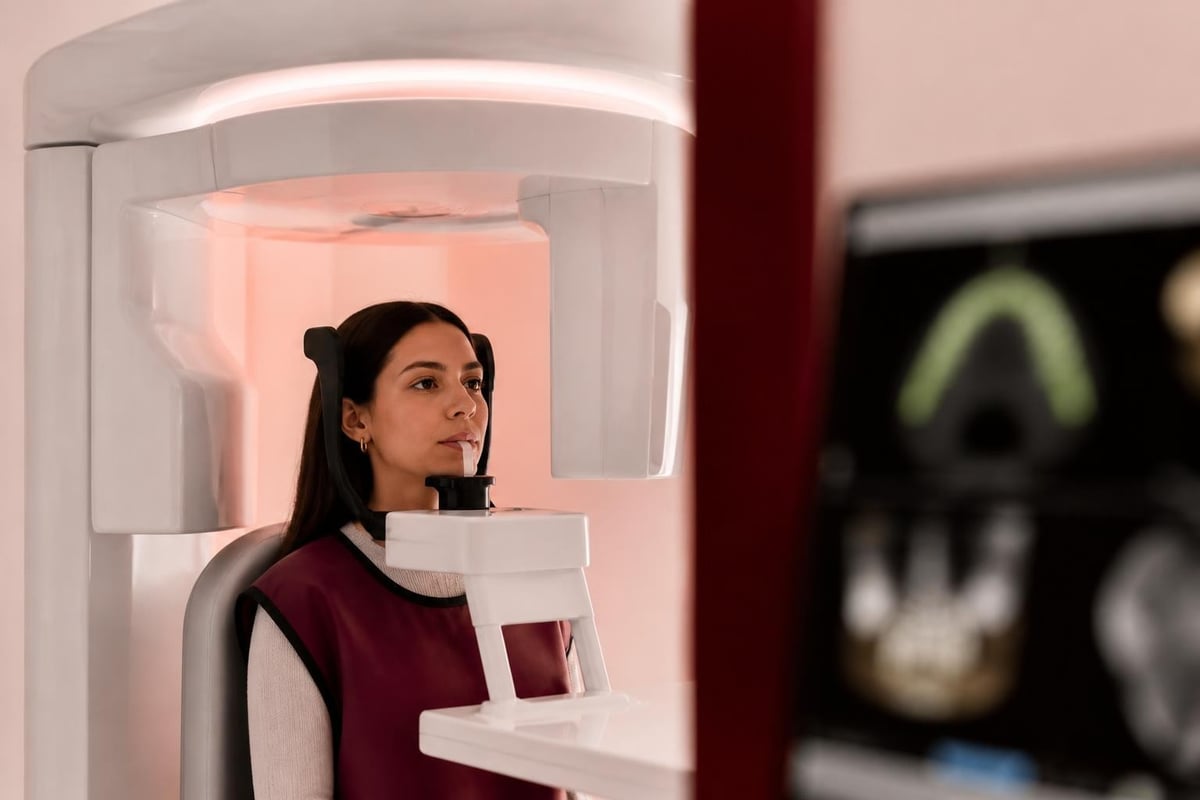
The use of dental Petra has shown particular relevance in various areas of modern dentistry. In orthodontics, especially in the treatment of children and adolescents, this technology allows for precise evaluation of the position of tooth roots, the development of permanent teeth not yet erupted, and the relationship between bone and dental structures.
For clinics specialising in aesthetic and integrative treatments, Petra Dental offers a comprehensive overview that facilitates the planning of complex procedures. The ability to visualise hard tissues, such as tooth enamel and alveolar bone, alongside soft tissues, such as the gums and periodontal ligaments, provides a holistic understanding of the patient’s oral health.
Advantages of PETRA Dental Over Traditional Methods
When compared with conventional imaging techniques, Petra Dental technology offers numerous advantages that benefit both healthcare professionals and patients. The absence of ionising radiation is particularly important in paediatric orthodontics, where minimising radiation exposure is a clinical priority.
| Characteristic | PETRA Dental | Computerised Tomography | Panoramic X-ray |
|---|---|---|---|
| Radiation | None | Moderate to High | Low to moderate |
| Metal artefacts | Minimums | Significant | Moderates |
| Soft Tissue Visualization | Excellent | Limited | Not available |
| Exam Time | 5-10 minutes | 1-2 minutes | Less than 1 minute |
| Cost | Raised | Moderate | Low |
| Spatial Resolution | High | Very High | Moderate |
Reduction of Metallic Artifacts
One of the most significant challenges in traditional dental imaging is the presence of artefacts caused by metallic restorations, orthodontic appliances, and implants. Scientific studies have shown that PETRA sequences are more effective at reducing these artefacts than other magnetic resonance imaging techniques.
This capability makes Petra Dental particularly valuable for patients with multiple restorations or fixed orthodontic appliances. The ability to obtain clear diagnostic images without interference from metallic artefacts enables orthodontists to accurately assess the progress of treatment and make any necessary adjustments based on reliable visual information.
Benefits for different patient groups:
- Children: Eliminating exposure to radiation during long-term orthodontic treatment
- Patients with implantsClear visualisation of surrounding tissues without distortion
- Complex casesDetailed assessment of atypical anatomy or rare pathologies
- Surgical planningPrecise three-dimensional information for invasive procedures
PETRA Dental in Paediatric Orthodontics
The application of dental Petra in paediatric orthodontics represents a paradigm shift in how professionals assess and plan treatments for children and adolescents. The ability to monitor dental development without repeated exposure to radiation is particularly valuable during active growth years.
Dental Development Assessment
In paediatric patients, Petra Dental technology allows for precise monitoring of permanent tooth eruption, early identification of developmental anomalies, and planning of orthodontic interventions at the most appropriate time. This detailed three-dimensional visualisation capability facilitates communication with parents, enabling clear demonstration of unerupted tooth positions and explanation of treatment planning.
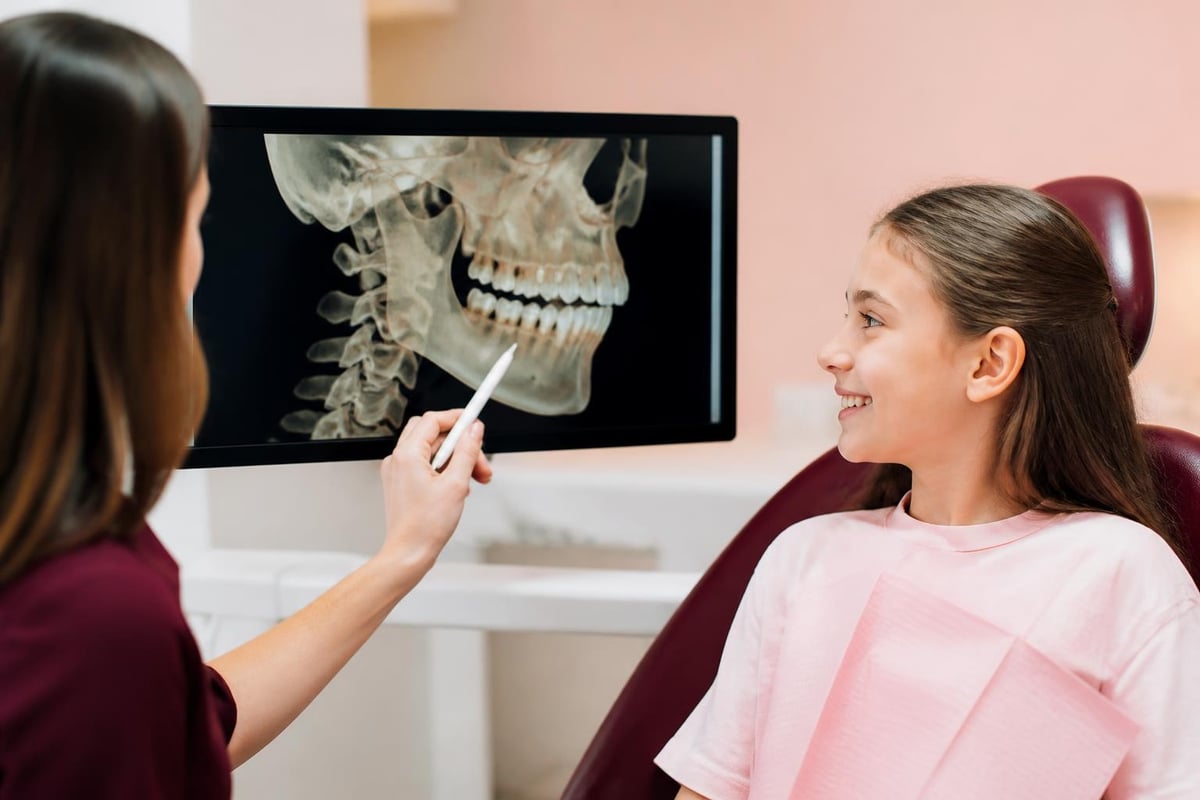
The modern clinic dedicated to orthodontic treatment for children benefits significantly from the integration of this technology into its diagnostic workflow. The combination of a welcoming environment and advanced technology creates a positive experience for young patients, reducing the anxiety often associated with imaging examinations.
Monitoring of Long-Term Treatments
Orthodontic treatments in children often extend over several years, requiring periodic assessments to monitor progress and make necessary adjustments. The use of dental petra in this context offers a safe alternative to multiple traditional radiographic exposures.
Stages of monitoring with PETRA dental:
- Initial assessment: Complete documentation of the dental and skeletal situation before the start of treatment
- Active phase control: Verification of tooth movement and periodontal tissue response during active treatment
- Pre-tensioning assessmentConfirmation of the final position of teeth and roots before brace removal
- Post-treatment follow-upMonitoring the stability of results and continuous development of orofacial structures
Integration of PETRA Dental into Modern Clinical Practice
The incorporation of Petra Dental technology into an integrative dental medicine clinic requires not only investment in equipment but also adequate training of the clinical team and the creation of protocols that maximise patient benefits. In clinics located in sophisticated urban areas, where patients seek a balance between advanced technology and a welcoming environment, this integration becomes particularly relevant.
Clinical Use Protocols
The effective implementation of dental Petra requires the development of clear protocols that define when this technology offers advantages over alternative methods. Not all clinical cases justify the use of this advanced technique, and it is important to establish selection criteria based on scientific evidence and the specific needs of the patient.
| Clinical Indication | PETRA Priority | Viable Alternative | Observations |
|---|---|---|---|
| Complex paediatric orthodontics | High | TC Cone Beam | Prefer PETRA due to the absence of radiation |
| Temporomandibular joint assessment | High | Conventional resonance | PETRA offers better bone visualisation |
| Planning for multiple restorations with implants | Moderate | TC with reduction algorithms | Evaluate cost-effectiveness |
| Routine endodontics | Low | Periapical radiograph | Conventional methods are sufficient |
| Initial periodontal assessment | Low | Clinical examination + radiographs | Book PETRA for complex cases |
Patient Experience and Communication
Petra Dental technology also significantly contributes to improving the patient experience in the dental clinic. The examination is non-invasive, quiet compared to other MRI techniques, and provides impressive visual results that facilitate understanding of the diagnosis and treatment plan.
For clinics that value a calm environment and an approach centred on the patient’s wellbeing, Petra Dental aligns perfectly with this philosophy. The absence of radiation and the comfort provided during the examination reflect a commitment to dental practices that prioritise long-term health.
The Future of PETRA Dental and Emerging Trends
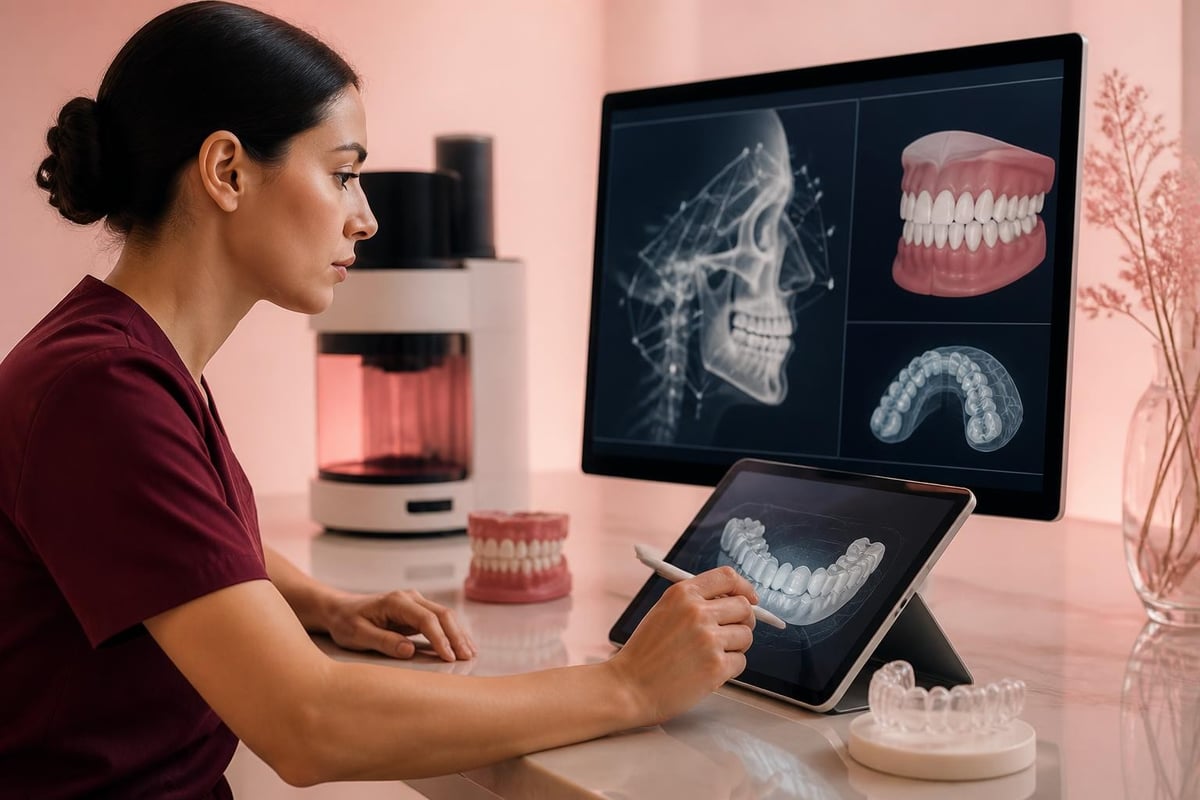
The continuous evolution of dental petra technology points to exciting developments that promise to further expand its clinical applications. The integration of artificial intelligence for automatic image analysis, the reduction of acquisition times and the development of specific protocols for different areas of dentistry are among the most promising trends for the coming years.
Integration with Digital Planning
Combining dental petra images with three-dimensional planning software allows orthodontists to simulate treatments with unprecedented precision. This integration facilitates the visualisation of the expected final result, helping patients to understand the value of the proposed treatment and increasing compliance with the therapeutic plan.
Future applications in development:
- Automated analysis of craniofacial growth in paediatric patients
- Integration with intraoral scanners for fully digital planning
- Remote monitoring protocols with simplified image acquisition
- Case library for comparison and outcome prediction
- Augmented reality for interactive visualisation of anatomical structures
Accessibility and Democratisation of Technology
Although dental 3D printing is currently a technology with high implementation costs, trends indicate progressive democratisation as more centres adopt this solution and manufacturers develop more compact and economical systems. This evolution could make the technology accessible to a growing number of clinics, benefiting more patients.
For professionals working in integrative and aesthetic dentistry, staying up to date with these emerging technologies is essential to offering excellent care. Continuous training and the critical evaluation of new diagnostic tools make it possible to make informed decisions about which investments will bring the greatest benefit to clinical practice and to patients.
Practical Considerations for Professionals
The decision to incorporate dental ceramic into a dental clinic must consider multiple factors beyond the technical capability of the technology. The volume of patients who would significantly benefit from this modality, the profile of the clinical practice, the geographical location and the market positioning strategy are important elements in this evaluation.
Cost-Benefit Analysis
Professionals working with paediatric orthodontics, complex oral rehabilitation cases or orthognathic surgery will find Petra Dental a particularly valuable tool. The ability to offer more precise diagnostics and monitor treatments in a non-invasive manner can significantly set a clinical practice apart in a competitive market.
In premium urban locations, where patients look not only for excellent clinical results but also for superior care experiences, the availability of advanced technology such as Petra dental can be a decisive factor in choosing a practitioner. Investment in cutting-edge equipment must be accompanied by effective communication that explains to patients the concrete benefits they will receive.
Factors to consider during implementation:
- Demographic profile of the current and potential patient base
- Specialities offered and complexity of cases treated
- Physical space available for equipment installation
- Clinical and technical team training capacity
- Marketing strategy to communicate the availability of the technology
- Partnerships with specialised imaging centres as an alternative
Training and Skills Development
The effective use of dental PET requires not only a technical understanding of the equipment, but also the ability to interpret the images obtained and integrate this information into clinical planning. Specialised training programmes, participation in scientific congresses and collaboration with research centres are valuable strategies for developing skills in this area.
For clinics that adopt a holistic and integrative approach to dentistry, Petra Dental represents another tool in the therapeutic arsenal that enables them to offer personalised, evidence-based care. The technology serves the greater goal of providing patients with treatments that respect their overall health, minimise invasive interventions and maximise aesthetic and functional results.
PETRA dental technology represents a significant evolution in dental imaging, offering more accurate diagnoses with greater comfort and safety for patients, especially in paediatric orthodontics. If you are looking for a dental experience that combines advanced technology with a welcoming environment and integrative approach, Dr Susana Santos offers personalised care on Avenida da Liberdade in Lisbon, where the focus on well-being and exceptional aesthetic results is reflected in every treatment. Book your appointment to discover how modern dentistry can transform your smile with comfort and safety.